
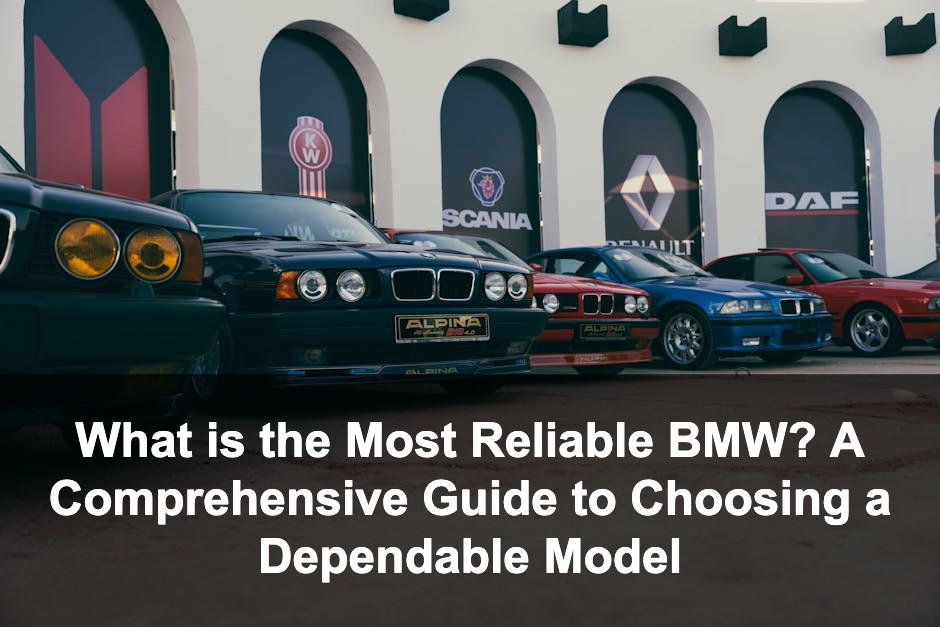
BMW is renowned for its blend of performance, luxury, and innovative engineering. However, when it comes to reliability, some models stand out more than others. If you are wondering what is the most reliable BMW, the BMW E46 3 Series (produced from 1999 to 2006) and the BMW F30 3 Series (produced from 2012 to 2019) consistently rank as the most dependable choices, particularly the naturally aspirated and four-cylinder variants. These models offer a solid track record of durability, manageable maintenance costs, and fewer severe issues compared to many other BMWs. In this article, we will explore what makes a BMW reliable, provide data-driven comparisons, and explain why certain models have earned their reputation for dependability. Whether you are looking to purchase a used BMW or simply want to understand which models are best for long-term ownership, this guide will help you make an informed decision.
Important Facts About BMW Reliability
Defining Reliability in BMWs: What Matters Most?
Reliability in the automotive world goes beyond simply starting every morning. For BMWs, reliability means a combination of mechanical durability, reasonable maintenance costs, and minimal incidence of severe or recurring problems. Unlike some mass-market brands, BMWs are known for their performance engineering, which can sometimes introduce complexity that affects reliability. However, certain models and engines have established a reputation for robust build quality and manageable ownership experiences. When assessing reliability, experts and owners look at several factors: frequency and severity of repairs, cost of ownership over time, and the availability of affordable replacement parts. Models with naturally aspirated engines (as opposed to turbocharged ones) and simpler electronics tend to fare better in long-term reliability studies. Additionally, BMWs with fewer complex features (such as advanced infotainment or air suspension systems) often require less unscheduled maintenance. A reliable BMW is one that experiences fewer major breakdowns, maintains its performance over high mileage, and does not burden the owner with excessive repair bills. This is why the E46 and F30 3 Series, especially their base engine variants, are frequently cited as the most reliable BMW models.
BMW E46 and F30 3 Series: The Gold Standard for Reliability

Among BMW enthusiasts and automotive experts, the E46 3 Series (1999-2006) and F30 3 Series (2012-2019) rise to the top for long-term reliability. The E46, particularly in its 325i and 330i trims, is lauded for its robust mechanicals, relatively simple electronics, and high-quality materials. The naturally aspirated inline-six engines in these models (M54) are well-regarded for their longevity and ease of maintenance, provided that cooling and oil systems are regularly serviced. The F30 generation, especially those equipped with the four-cylinder N20 or B48 engines, improved upon BMW’s reliability record by addressing many of the issues that plagued earlier turbocharged models. These cars benefit from advancements in engine design, more reliable timing chains, and improved electronics. The F30 also delivers a more modern driving experience, greater fuel efficiency, and a more refined cabin while maintaining a relatively low incidence of severe mechanical problems. Both generations are widely available on the used market, with plentiful parts and strong community support. While every car has its quirks, these models stand out for providing a blend of driving enjoyment and lower long-term ownership risks than many other BMWs.
BMW E46 vs F30 3 Series: Reliability Comparison
| Model | Notable Engines | Common Issues |
|---|---|---|
| E46 (1999-2006) | M54 Inline-6 | Cooling system, window regulators |
| F30 (2012-2019) | N20/B48 Inline-4 | Timing chain (early N20), minor electronics |
Pros and Cons of E46 and F30 3 Series
✅ Pros
- Robust engine options with proven longevity
- Wide parts availability and strong owner communities
- Lower frequency of major repairs compared to other BMWs
❌ Cons
- Some age-related issues, especially in older E46s
- Still higher maintenance costs than non-premium brands
Other Notably Reliable BMW Models and Engines
While the E46 and F30 3 Series top reliability lists, several other BMW models and engine families have also built a reputation for dependability. The E39 5 Series (1995-2003), particularly the 528i and 530i with naturally aspirated inline-six engines, are often praised for their build quality and mechanical simplicity. The E90/E91/E92 3 Series (2006-2011) with the non-turbo N52 engine is another solid choice, offering a good balance of modern features and reliability. BMW’s X3 (E83, 2003-2010) and X5 (E53, 2000-2006) SAVs, when equipped with inline-six engines, have also shown the ability to rack up high mileage with proper care. However, buyers should beware of models with complex V8 engines or early turbocharged units, as these are more prone to costly issues. Engine choice is critical in BMW reliability. The N52 naturally aspirated inline-six is widely considered one of BMW’s most reliable modern engines. Conversely, some turbocharged engines, such as the N54 and early N20, have a history of high-pressure fuel pump and timing chain issues. Choosing a basic trim with fewer electronic features and a proven powertrain is key to maximizing BMW reliability.
Factors That Affect BMW Reliability: Ownership, Maintenance, and Model Year
BMW reliability is not just about the model and engine; how a car is maintained and the specific year of production play significant roles. Regular maintenance, such as timely oil changes, coolant flushes, and replacement of wear items, is essential for any BMW. Owners who follow the manufacturer’s maintenance schedule and address minor issues before they escalate tend to enjoy much longer vehicle lifespans. The model year can also influence reliability. For example, early production years of a new BMW generation might have more teething issues, while later years often benefit from factory updates and improved parts. It is also important to consider the car’s history—vehicles with incomplete service records or repeated neglect can develop chronic problems, no matter how reliable the model might be on paper. Lastly, regional factors like climate (e.g., harsh winters impacting electronics and suspension) and road conditions can impact the longevity of BMWs. Savvy buyers look for well-maintained examples from moderate climates and with full service histories for the best chance at trouble-free ownership.
Tips for Maximizing BMW Reliability: What Owners Should Know
Achieving maximum reliability from any BMW hinges on proactive care and informed ownership. Start by researching common weak points for your specific model and addressing them preemptively—these often include the cooling system, oil leaks, and suspension bushings. Using high-quality parts and fluids, sticking to shorter oil change intervals than the factory suggests, and regularly inspecting for leaks or worn components are all best practices. Establishing a relationship with a reputable independent BMW specialist can also save money and ensure high-quality service. Many common issues are well known in the enthusiast community, so utilizing online forums, model-specific guides, and owner groups can help you spot and resolve problems early. For buyers, always prioritize vehicles with full service histories, minimal modifications, and clear records of preventive maintenance. Avoiding models with notorious trouble spots, such as the early turbocharged engines, is also a wise strategy for keeping ownership costs predictable and manageable.
Checklist for Reliable BMW Ownership
- Follow a strict, proactive maintenance schedule
- Use OEM or high-quality aftermarket parts
- Address known weak points for your model early
- Keep thorough service records
- Consult BMW enthusiast forums for model-specific tips
Frequently Asked Questions
Which BMW model is considered the most reliable overall?
The BMW E46 3 Series (especially the 325i/330i with the M54 engine) and the F30 3 Series (with the N20/B48 four-cylinder engines) are widely regarded as the most reliable BMWs for long-term ownership.
Are BMWs expensive to maintain even if they are reliable?
Even the most reliable BMWs generally have higher maintenance costs than non-premium brands, but models like the E46 and F30 keep costs more manageable due to parts availability and simpler engineering.
What is the most reliable BMW engine?
The N52 naturally aspirated inline-six, found in many E90/E91/E92 3 Series, is considered one of BMW’s most reliable and low-maintenance engines.
Do newer BMWs offer better reliability than older models?
Newer BMWs benefit from advances in engineering and safety, but increased complexity can lead to more electronic issues. Some older models, especially those with simpler engines, are actually more reliable in the long term.
What should I look for when buying a used BMW for reliability?
Seek models with full service histories, minimal modifications, and engines known for durability. Avoid cars with neglected maintenance or early turbocharged engines with known issues.
Conclusion
Selecting the most reliable BMW comes down to choosing the right model, engine, and maintenance history. The E46 3 Series and F30 3 Series stand out as the safest bets for dependable ownership, especially when equipped with proven naturally aspirated or modern four-cylinder engines. By focusing on these models, staying proactive with maintenance, and leveraging community knowledge, BMW enthusiasts can enjoy the brand’s signature driving experience without undue reliability concerns. Ultimately, a well-chosen and well-cared-for BMW can deliver many years and miles of satisfying, trouble-free driving.