

BMW is a brand synonymous with luxury, performance, and engineering excellence. Among its diverse lineup, the models bearing the ‘M’ badge have become legendary, standing out for their exceptional power and motorsport pedigree. But what does the ‘M’ actually stand for in BMW? In short, the ‘M’ stands for ‘Motorsport.’ This simple letter represents BMW’s commitment to high-performance vehicles, initially built for racing, and now for both the track and the road. The story behind the M badge is deeply rooted in BMW’s history of competition, innovation, and the pursuit of driving perfection. Over the decades, the M division has evolved from a small team focused on racing success to a world-renowned arm of BMW, responsible for some of the most thrilling and desirable cars ever produced. In this article, we’ll explore the origins, meaning, and impact of the BMW M badge, along with how it differentiates from standard BMW models. We’ll also delve into key statistics, a comparison table of M and non-M models, and answer the most common questions about BMW’s iconic ‘M.’
Important Facts About BMW M
The Meaning Behind the M: Origins and Motorsport Heritage
The letter ‘M’ in BMW M stands for ‘Motorsport,’ a direct reference to the division’s origins in professional racing. Established in 1972 as BMW Motorsport GmbH, the division was initially tasked with developing racing cars that could compete at the highest levels of international motorsport. The iconic BMW 3.0 CSL was one of its first projects, dominating touring car championships and establishing BMW’s reputation as a performance powerhouse. BMW’s decision to form the M division was driven by a desire to create a dedicated team that could focus exclusively on performance engineering, innovation, and racing success. The expertise honed on the track quickly began to influence BMW’s road cars, leading to the birth of the first M-badged production vehicle, the BMW M1, in 1978. The M1 was a mid-engined supercar designed with input from racing engineers, and its success paved the way for the M philosophy to permeate the rest of the BMW lineup. Today, the M badge represents a blend of motorsport technology and everyday usability, with each M model embodying the division’s relentless pursuit of driving excellence.
Key Milestones in BMW M History
| Year | Milestone | Impact |
|---|---|---|
| 1972 | BMW Motorsport GmbH founded | Established BMW’s focus on motorsport engineering |
| 1978 | BMW M1 launched | First M-badged production car |
| 1986 | BMW E30 M3 introduced | Iconic success in touring car racing |
| 1998 | BMW M division renamed to BMW M GmbH | Reflected its expanded focus on performance road cars |
How M Models Differ from Standard BMW Cars
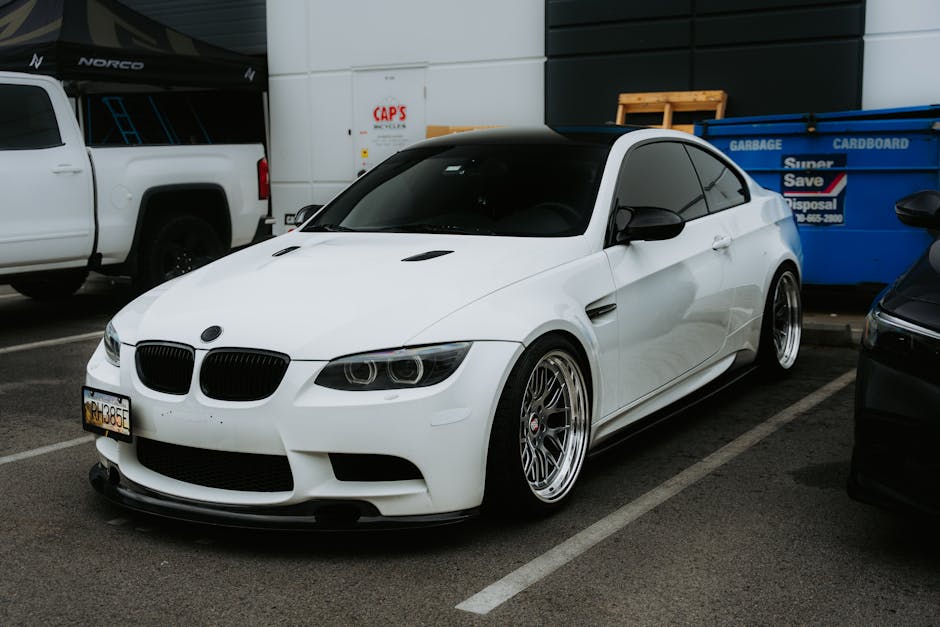
BMW M models are not simply upgraded versions of standard BMW vehicles; they are comprehensively re-engineered for higher performance, sharper handling, and a more immersive driving experience. The differences between M cars and their regular counterparts can be found in nearly every aspect of the vehicle—from the engine and suspension to the brakes and interior design. Powertrains in M cars are often unique, featuring hand-built engines or heavily modified versions of BMW’s standard units. These engines deliver significantly more horsepower and torque, providing explosive acceleration and higher top speeds. M vehicles also incorporate advanced chassis technologies, such as adaptive suspension, limited-slip differentials, and high-performance braking systems, all tuned for spirited driving and track use. Visually, M models stand out with aggressive aerodynamic bodywork, exclusive paint colors, and signature quad exhaust tips. Inside, drivers are treated to sportier seats, unique trim pieces, and M-specific instrument displays. Every detail is carefully crafted to enhance both performance and driver engagement, making M cars the ultimate expression of BMW’s engineering prowess.
BMW M Model vs. Standard Model Comparison
| Feature | BMW M3 Competition | BMW 330i |
|---|---|---|
| Engine | 3.0L Twin-Turbo Inline-6 (503 hp) | 2.0L Turbo Inline-4 (255 hp) |
| Transmission | 8-speed M Steptronic / 6-speed manual | 8-speed automatic |
| 0-60 mph Time | 3.8 seconds | 5.6 seconds |
| Brakes | M Compound Brakes | Standard Brakes |
| Suspension | Adaptive M Suspension | Standard Suspension |
| Price (MSRP, 2024) | $76,000+ | $44,500+ |
Pros and Cons of Choosing a BMW M Model
✅ Pros
- Exceptional performance and acceleration
- Track-ready engineering and features
- Distinctive design and prestige
❌ Cons
- Higher purchase and maintenance costs
- Stiffer ride may be less comfortable for daily driving
- Typically lower fuel efficiency than non-M models
The Evolution of the M Badge: From Track to Everyday Roads
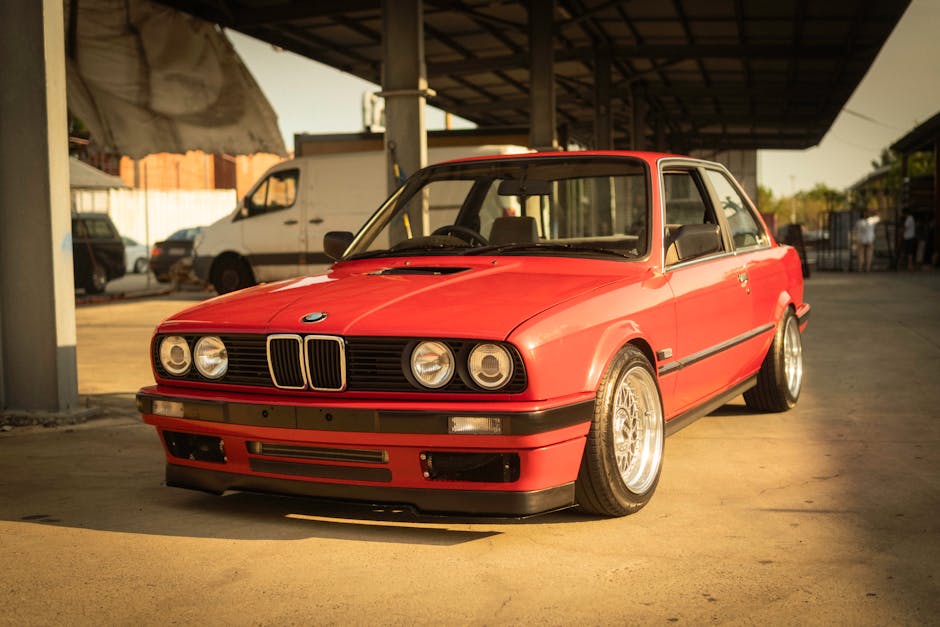
Over the past five decades, the M division has transformed from a niche motorsport team into a global symbol of automotive performance. In its early years, BMW M focused almost exclusively on race cars and homologation specials, vehicles designed to meet the requirements of racing series. The legendary E30 M3, for example, was built to dominate touring car championships and is still revered by enthusiasts for its pure, analog driving experience. As demand for high-performance road cars grew, the M division expanded its lineup to include sedans, coupes, convertibles, and eventually SUVs like the X5 M and X6 M. Each generation brought new innovations, such as the introduction of turbocharging, advanced driver assistance systems, and lightweight construction techniques. Despite these changes, the core philosophy of blending motorsport technology with everyday usability has remained unchanged. BMW has also introduced ‘M Performance’ models—vehicles that slot between standard BMWs and full M models, offering a taste of M engineering without the full commitment. This expansion reflects the enduring appeal and versatility of the M brand.
Evolution of BMW M Model Types
| Era | Key Models | Focus |
|---|---|---|
| Late 1970s-1980s | M1, E28 M5, E30 M3 | Motorsport homologation, performance sedans/coupes |
| 1990s-2000s | E36/E46 M3, E39 M5 | Refinement and broader appeal |
| 2010s-present | F80 M3, F90 M5, X3 M, X6 M | Turbocharging, tech integration, performance SUVs |
M Performance vs. True M: What’s the Difference?

In recent years, BMW has expanded its performance offerings by introducing ‘M Performance’ models, which are distinct from full-fledged M cars. These vehicles, such as the M340i or X3 M40i, are engineered for enhanced performance over standard models but do not receive the comprehensive reengineering that defines true M vehicles. M Performance models typically feature upgraded engines, sportier styling, and enhanced suspension systems, but they lack the specialized components and tuning found in M cars like the M3 or M5. For example, while an M340i delivers impressive power and athletic handling, it does not have the bespoke engine, brakes, or track-ready aerodynamics of an M3. This differentiation allows BMW to cater to a broader range of driving enthusiasts. M Performance models are a great choice for those seeking sporty driving dynamics without the full intensity (and cost) of an M car. Meanwhile, the true M models remain the pinnacle of BMW’s performance engineering, designed for those who demand the ultimate driving machine.
The Global Impact and Legacy of BMW M

The influence of the BMW M badge extends far beyond the racetrack. M cars have become cultural icons, celebrated in film, motorsport, and car enthusiast communities worldwide. Their distinctive blend of luxury, performance, and daily usability has set benchmarks for other manufacturers and inspired countless imitators. BMW M’s commitment to innovation is evident in its adoption of new technologies, such as carbon fiber construction, electrification, and advanced driver aids. The division continues to push boundaries, with models like the M3 and M4 Competition setting new standards for performance sedans and coupes. Meanwhile, limited-edition models like the M4 GTS and M5 CS have become instant collector’s items, prized for their exclusivity and engineering brilliance. As the automotive industry moves toward electrification, BMW M is already exploring hybrid and electric performance vehicles, ensuring that the M legacy will adapt and thrive in a new era. The enduring appeal of the M badge lies in its ability to evolve while staying true to its motorsport roots.
Frequently Asked Questions
What does the ‘M’ stand for in BMW?
The ‘M’ in BMW stands for ‘Motorsport.’ It represents BMW’s division dedicated to high-performance and racing-inspired vehicles.
Are BMW M cars hand-built?
Most BMW M engines are hand-assembled by skilled technicians in specialized facilities, ensuring quality and performance. However, the vehicles themselves are produced using a combination of manual assembly and advanced automation.
What is the difference between M Performance and M models?
M Performance models (like the M340i) offer enhanced power and sporty features over standard BMWs, but only true M models (like the M3) are fully engineered by BMW M GmbH with unique engines, components, and track-focused capabilities.
Can you daily drive a BMW M car?
Yes, many BMW M cars are designed to be practical for daily use, offering comfort and advanced features alongside their high-performance capabilities. However, their stiffer suspension and higher running costs may not suit everyone’s daily needs.
What are some of the most popular BMW M models?
The BMW M3, M5, and M2 are among the most popular M models, known for their blend of performance, practicality, and driving enjoyment.
Are there electric or hybrid BMW M cars?
BMW M has begun exploring electrified performance, with models like the BMW XM plug-in hybrid, indicating that future M cars may include fully electric options.
Conclusion
The ‘M’ in BMW stands for ‘Motorsport,’ a single letter that encapsulates decades of racing heritage, engineering innovation, and a relentless pursuit of driving excellence. From humble beginnings in the early 1970s to the present day, BMW M has grown into a global icon, recognized for creating some of the most thrilling and desirable cars on the road. Whether you’re drawn to the raw performance of an M3, the luxury and speed of an M5, or the practicality of an M Performance SUV, the M badge represents a commitment to motorsport-inspired engineering and everyday enjoyment. As the automotive world evolves, BMW M continues to set new standards and embrace new technologies, ensuring that the legend of the M badge will live on for generations of driving enthusiasts to come.